
24 October 18:30
Festa del cinema
Synopsis
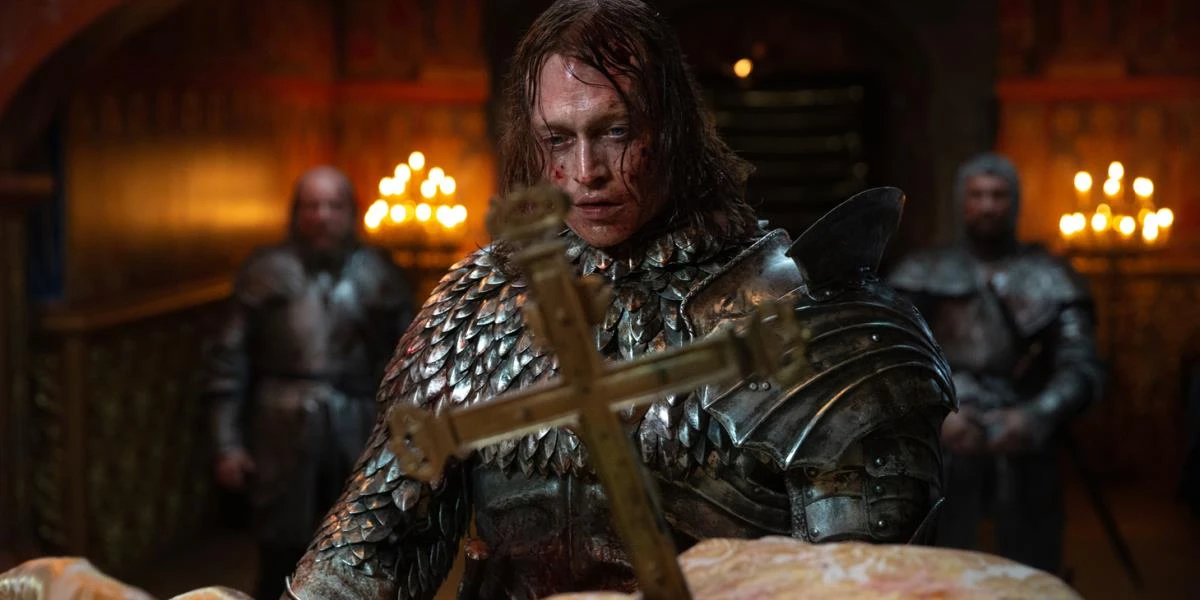
In the beginning, there was Transylvania in the mid-fifteenth century. Prince Vladimir, after the violent death of his beloved wife, renounces God, and in so doing inherits an eternal curse on his head. He becomes the vampire Dracula – a burden he will carry down through the centuries. Our titular hero challenges fate and death itself, guided by a single hope: finding his lost love.
COMMENTARY
The story of the iconic vampire conceived by Bram Stoker in his 1897 novel is moved from London and the Industrial Revolution to Paris and the Belle Epoque by Luc Besson, who places front and centre the story of an obsessive, immortal love, as in Stoker and Coppola’s own Dracula.
DIRECTOR'S STATEMENT
I was talking to Caleb Landry Jones, and we discovered that we both adored Bram Stoker. Dracula is a love story, but when it came out, people were fascinated by the fantastical element and thirst for blood. Over the years, the character turned into a monster. I continue to believe that this is a real love story instead, about a man willing to wait four hundred years to see the woman he loves, who had been torn from him. The horror side I was only moderately interested in: my Dracula is an aesthete, a flâneur, not a Nosferatu. A vampire in Paris instead of London? If they can turn Les miserables into a musical…
Director
Luc Besson
Luc Besson is one of France’s most influential contemporary filmmakers. He made his directorial debut in 1983 with The Last Battle, followed by a series of international hit films such as Nikita, Léon: The Professional, The Fifth Element, Lucy, and Valerian and the City of a Thousand Planets. In 2000, he founded his production and distribution company, EuropaCorp. He has directed over twenty films, produced over eighty of them, and has received over thirty awards.