

19 October 14:30
Festa del cinema
Synopsis
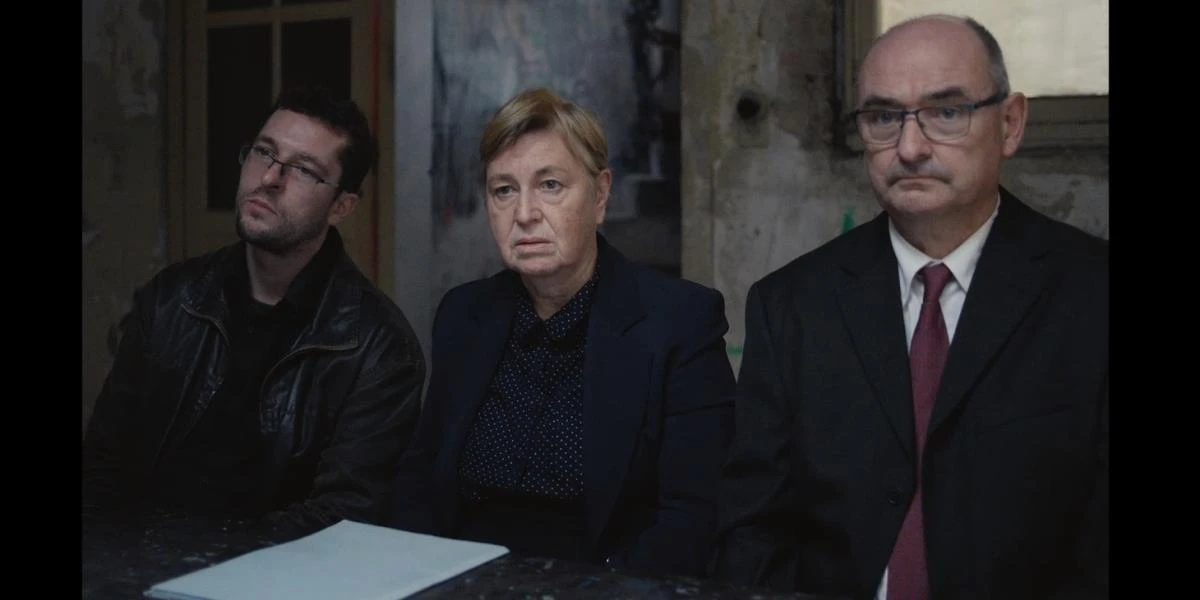
The spotlight is turned on a historical event which was shocking even for the period: in 1964, twenty-four-year-old poet Joseph Brodsky was accused of social parasitism by the Soviet regime. At the end of his trial, he was sentenced to five years of forced labour and exile in freezing northern Russia. Based on a detailed account of the trial by journalist Frida Vigdorova.
COMMENTARY
With staging rigorously stripped back to the essentials and bare minimalist sets, conveying a constant sense of oppression, Philippe Van Cutsem not only reconstructs events but also captures the full moral weight of the persecution, as well as the obsessions of an invisible yet omnipresent power. The surprising conclusion ties together the past with the present, underlining the burning contemporary relevance of this exemplary story.
DIRECTOR'S STATEMENT
Brodsky's crime was not putting his talent at the service of communism. The real defendant, however, was poetry. Historical distance allows us to view this episode from a very different angle than in the middle of the Cold War. It has been over thirty years since the Soviet regime collapsed, paving the way for the global spread of neo-liberal ideology and economics, the world is rushing headlong into chaos. Poetry is still in crisis: contempt for it is not limited to totalitarian regimes. In democratic societies, under the yoke of capitalism, the poetic realm — understood as a rejection of consumerist logic — is on the retreat. Capitalism extinguishes it even more effectively.
Director
Philippe Van Cutsem
Philippe Van Cutsem was born in Belgium in 1965. He is a filmmaker, plasticien artist and teacher. After initially devoting himself to painting and drawing, over time he starting working with video, installation and performance art. His years studying at École de Recherches Graphiques in Brussels, where he met and collaborated with Thibaut Halbardier, were crucial to his development. Since 2007, he has directed films exploring memory and its transmission as their primary themes.